

Movement for Learning: why kids need to move
If you walk into a school today, you will see most kids sitting down at their desks, with books or computers in front of them. Modern education expects that kids learn in a quiet and orderly fashion. But this isn’t actually the way kids are designed. Kids need movement for learning. So let’s get into why kids need movement, plus practical ways to incorporate movement and play in your homeschool.

We’re doing our kids a disservice when we stick them in front of screens or textbooks and expect them to learn. We can’t keep telling our kids to “sit down and be quiet.” Instead of changing the way our kids are designed, we have to change the way we expect them to learn.
This FREE guide that will give you real life examples of how your kids can learn academic and life skills – no curriculum required!

Why do kids need movement for learning?
The research clearly shows that movement and learning are intricately connected. Movement helps all kids in learning and is an important part of their development.
Our bodies and minds are created to work together, and just because it’s “normal” for kids to learn while sitting down, doesn’t mean it’s best or developmentally appropriate.
Here are some quick facts:
- movement helps to stimulate the brain and promote better learning
- movement helps to improve cognitive function, focus, memory, and more
- physical activity improves brain function by helping nerve cells to multiply, creating more connections for learning
- physical activity improves kids’ focus, retention, memory consolidation, creativity and mood
- significantly improved fine motor skills, gross motor skills, reading and spelling
- can help improve reading skills
- exercise supports our ability to think creatively, make decisions, focus and retrieve key information
- Exercise stimulates the growth of new neurons
- movement increases productivity (in kids and adults!)
Movement and play are crucial for all kids’ development, but there’s a developmental need for boys that can’t be ignored. Girls tend to be more adaptable to traditional education – textbooks, desks, and movement-free classrooms, so it may not always be as obviously detrimental. However, for both boys and girls, movement and play are two things that can’t be left out when it comes to education.
So how do we incorporate movement into our kids’ education?
Let them move while they’re learning
For most people, the instinct is to tell kids to sit down and be quiet while they’re doing their lessons or listening to a read aloud.
Why do we expect of our kids to do this? Because this is what the school system had taught us is the “right” way to learn.
Unfortunately, the school system isn’t doing this because it’s the best way for kids to learn. They’re doing it because it’s the best way for a teacher to manage a classroom of 25-30 kids at one time.
If you’re a homeschooling family, you can throw this idea right out the window. You can embrace the idea that moving helps your kids learn.
So maybe this means that they swing on the swing set while reading a book. They jump on a trampoline while practicing math facts. They create with playdough while you’re reading aloud.
But instead of trying to stop the movement, we need to work with it.
Provide many opportunities for hands-on learning
Most kids learn best when they can actually experience what they’re learning to some degree.
- a science experiment
- a visit to a local farm
- weighing objects on a scale
- using objects to count and add
- manipulating letter magnets to make words
- planting seeds in the ground
This doesn’t mean you have to leave all the curriculum behind, but not all curriculum factors in hands-on learning. Not all curriculum is actually designed with child development in mind – it’s designed with state standards in mind. These two things actually don’t always align!
Click here to see some of our favorite hands-on learning materials
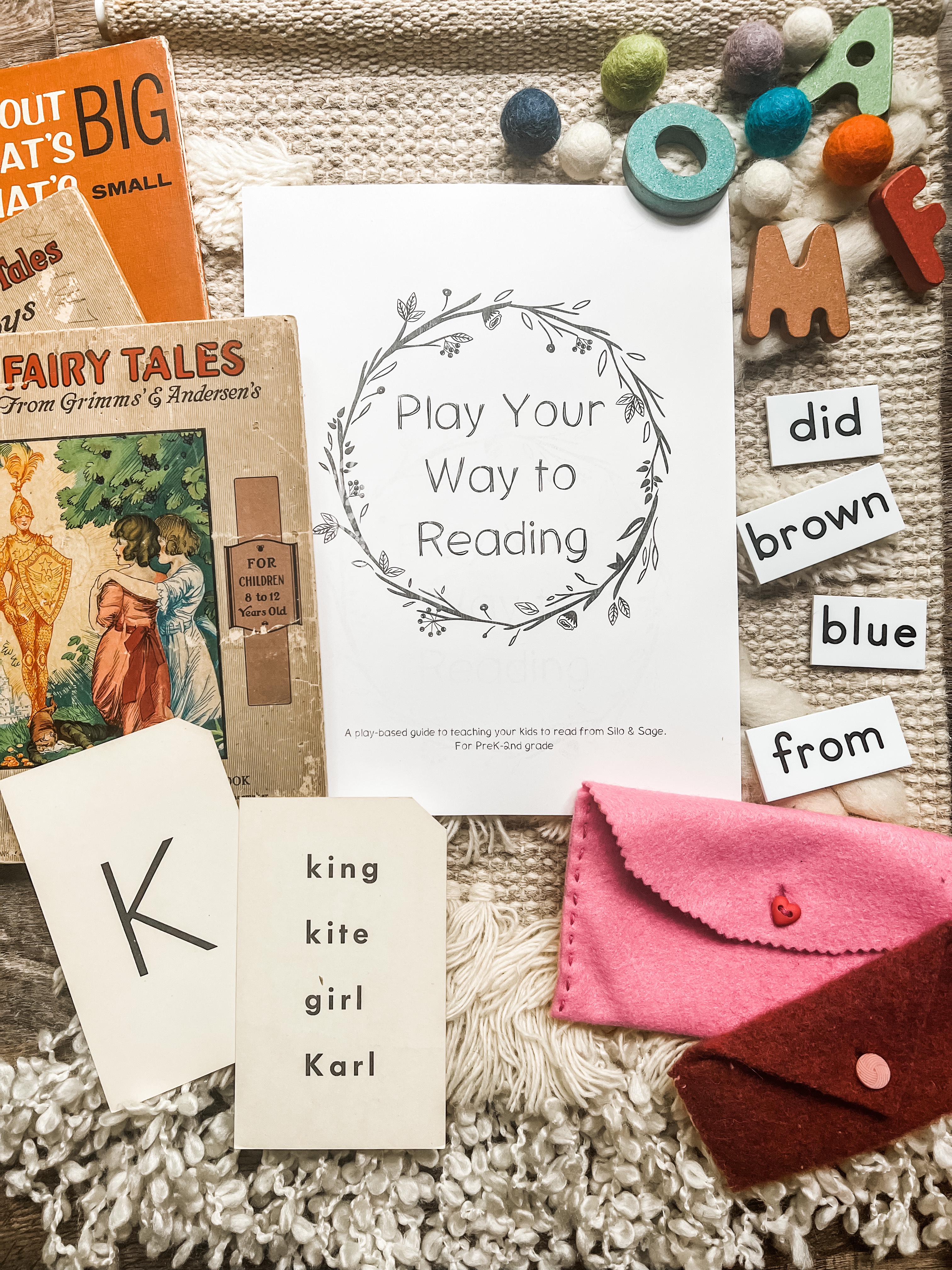
Ditch the flashcards and worksheets. Teach your child to learn through play!
Get your kids outside
It’s almost impossible to keep kids still when they’re outside, so get your kids outside whenever you can. Whether you’re just taking a walk around the block or going on a hike through the forest, nature has a way of inviting kids to move their bodies.
Don’t be afraid to take your learning outside, too!


Ditch the workbooks
Workbooks and textbooks don’t lend themselves to movement, so if your kids spend their day leaned over worksheets, they’ll have fewer opportunities to move their bodies.
Since a child’s body is not engaged when they’re learning through a workbook, they aren’t engaging parts of their brain either. Worksheets also don’t genearlly promote critical thinking or allow kids to think outside of just one right answer. So if we rely too much on worksheets and textbooks, we aren’t allowing a child’s whole brain to engage in learning!
Workbooks also don’t let kids experience their learning in real life. This is why we can’t forget about the everyday experiences our kids have. From cooking dinner to building a chicken coop, there are many ways for kids to learn that don’t require them to just sit one place and fill out worksheets.
Workbooks can be one tool you use in your homeschool, but be careful overusing it – especially in the elementary years.
Workbooks and curriculum are the school way of learning, but homeschooling shouldn’t look like school. Let’s make education look more like HOME than school.
Don’t insist on desks or tables
Most kids don’t learn best while sitting for long stretches in a desk or at a table. Instead, let them learn where they’re comfortable. My kids spread around on the floor, sit upside down on the couch, lay in a hammock, or bounce on a trampoline while they’re learning.
Take lots of brain breaks
Interrupt longer stretches of learning with movement! Check out the post below to see some of our favorite indoor toys for active kids.

Give lots of time for unstructured play
Don’t schedule all of your kids’ day – whether you’re homeschooling or not. It’s important that kids have time to do what they want to do, to be bored, and get creative. This is a crucial part of development and play, and has a huge impact on their learning.
Looking for more practical tips, encouragement, and ways to incorporate play in your home?
Register for the Let Them Play Workshop!
More research on movement for learning
The facts and information about movement for learning in this blog posts were taken from my own experience in the classroom, my years as a homeschooling mom, podcasts and books I’ve read over the years, and from my own research. If you’d like to read more, here are a few more articles on this topic:
How Movement and Exercise Help Kids Learn
How Does Physical Activity Impact Academic Performance?
Why Do Kids Need to Move to Learn?
Children Need to Move to Learn


